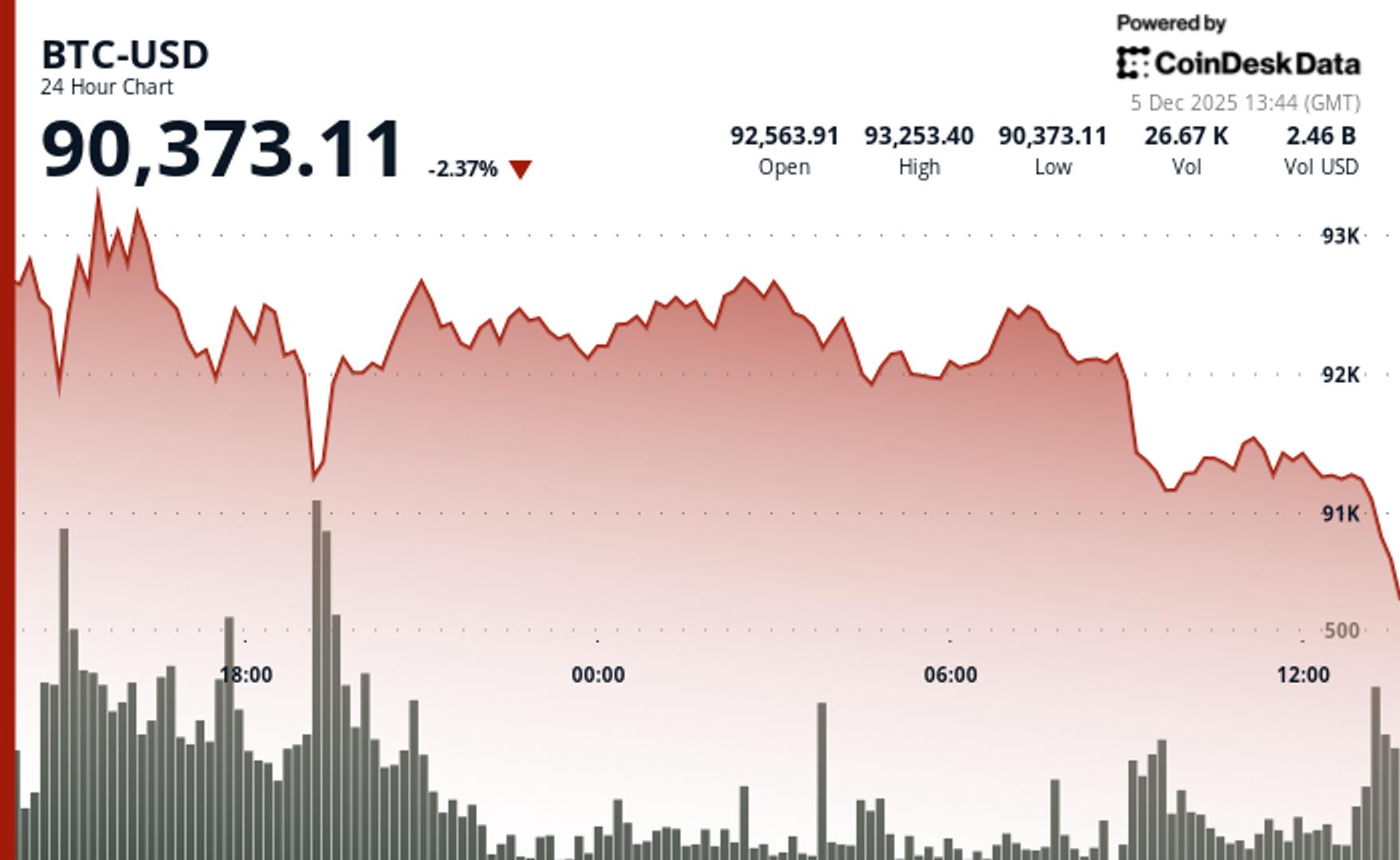
Not waiting until what’s become its customary plunge time of Sunday evening, bitcoin BTC$91,194.46 is getting an early start to the weekend this holiday season, continuing an overnight tumble and
Not waiting until what’s become its customary plunge time of Sunday evening, bitcoin BTC$91,194.46 is getting an early start to the weekend this holiday season, continuing an overnight tumble and
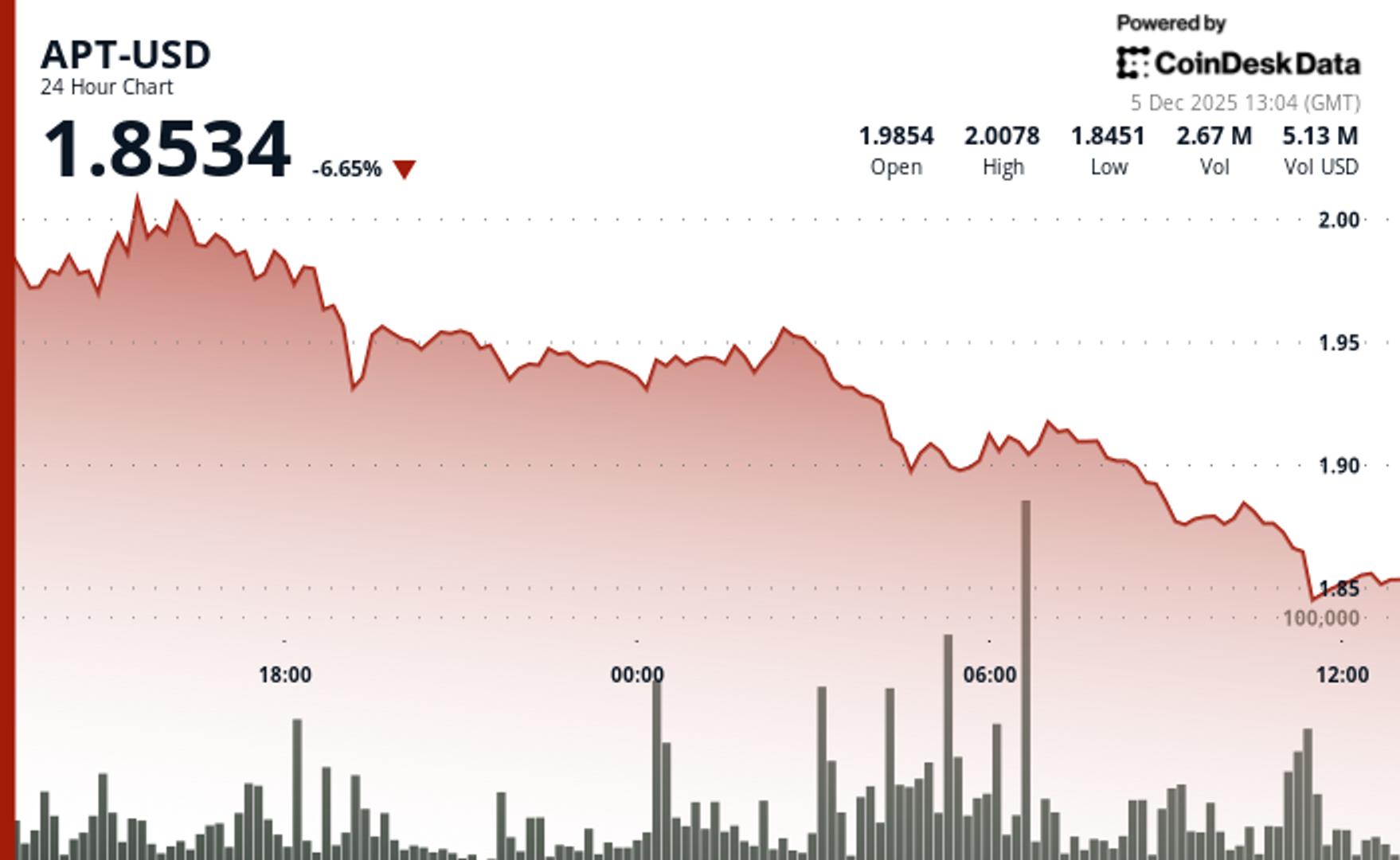
APT$1.8332 weakened sharply during Friday’s session, dropping 6% to $1.85 as technical selling overwhelmed buyers. The token lagged the broader crypto market, with the CoinDesk 20 index down 2.5% at
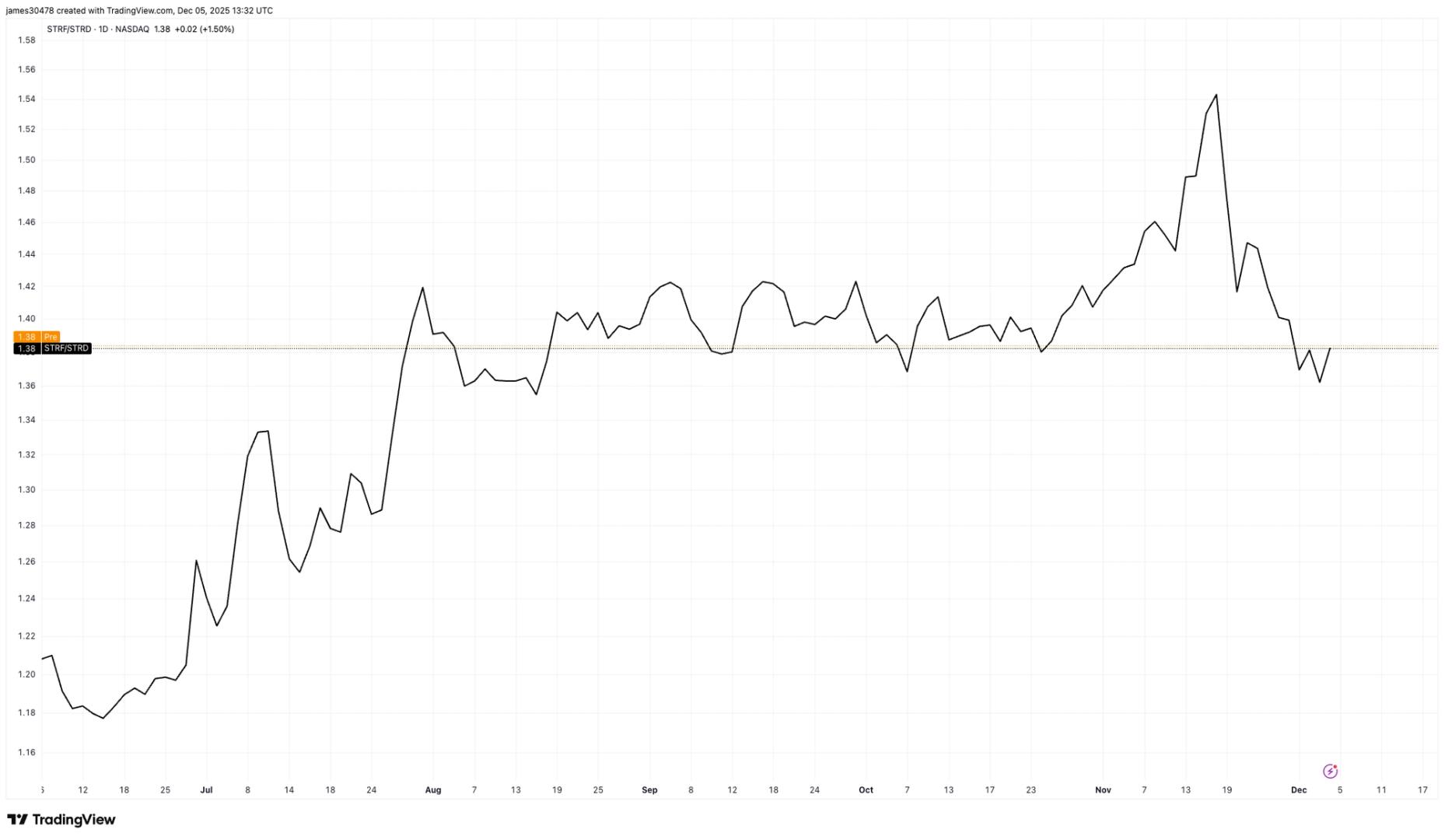
Strategy’s (MSTR) senior perpetual preferred stock, STRF, is increasingly standing out as the company’s most successful credit instrument since its launch in March. Trading at $110, STRF has risen 36%

Despite bitcoin’s recent sharp price declines, Wall Street Bank JPMorgan is sticking to its volatility-adjusted BTC-versus-gold model target which points to a theoretical price near $170,000 over the next six

The crypto market fell during the European morning, with bitcoin BTC$91,251.55 dropping to $91,200 after hitting a weekly high of $94,200 on Wednesday. The decline was confined to crypto: U.S.

BlackRock’s flagship Bitcoin ETF is seeing its heaviest redemption cycle since launch, with more than $2.7 billion pulled over the past five weeks as institutional flows continue to unwind into

Bitcoin hovered around $92,000 on Friday after another failed attempt to break above $93,000 overnight, extending the choppy, directionless structure that has defined the past several sessions. The move reinforces
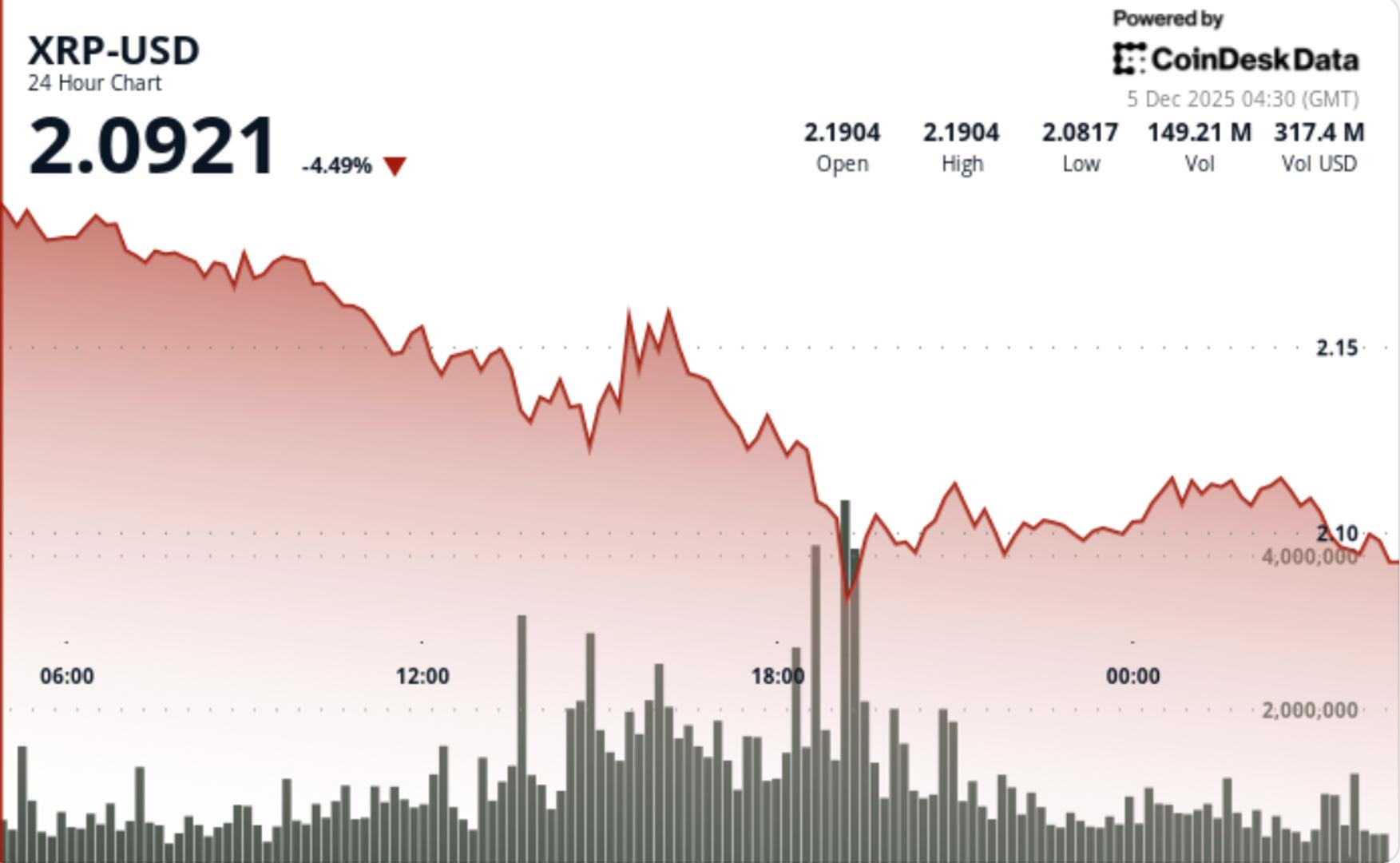
Ripple’s token breaks critical $2.07 floor amid volume surge, signaling deeper correction ahead. News Background XRP continues to face conflicting forces as short-term technical weakness clashes with strengthening institutional adoption.
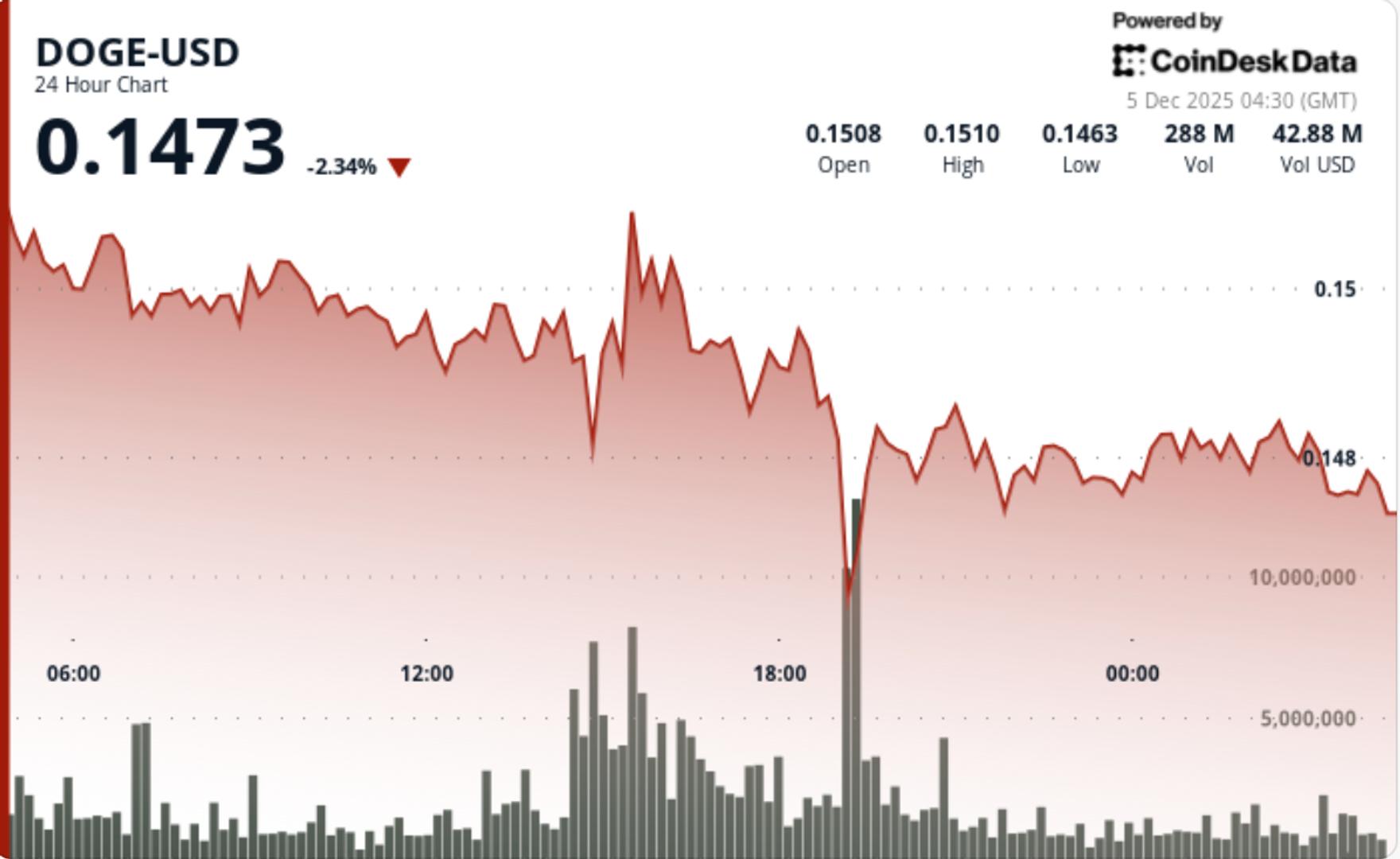
Meme coin breaks key technical level as institutional-sized trades dominate Wednesday session amid ETF filing buzz. News Background Dogecoin’s decline came despite an uptick in network activity and renewed ETF

The Fed’s preferred inflation gauge, core PCE, likely rose in September—moving in the wrong direction. Yet volatility indices show no signs of major turbulence. The core PCE likely rose 2.9%